Stairs are among the most visible and most-used surfaces in a two-story Las Vegas home, and the material you choose for them affects both looks and safety. Wood, laminate, and luxury vinyl plank can all work on stairs, but each has its own considerations.
This guide compares the main stair flooring options, explains the parts of a staircase, and covers safety, matching, and cost so you can plan a staircase that looks great and holds up to daily use.
Stairs Are Different From Floors
A staircase is detailed carpentry, not just flooring laid on an angle. Every tread, riser, and nosing has to be measured and cut precisely for a safe, tight, squeak-free result, which is why stairs are quoted separately from open floor area.
The material you choose has to suit this precision work and stand up to concentrated foot traffic.
Wood and Hardwood Treads
Solid wood treads are a classic, premium choice that brings warmth and a high-end feel to a staircase. They pair beautifully with hardwood floors and can be refinished over time.
Wood treads are ideal when you want the staircase to be a focal point and to match natural wood floors elsewhere in the home.
Engineered Wood on Stairs
Engineered wood treads offer the look of real wood with added stability, which suits the dry climate and slab construction common in the valley. Purpose-made stair treads and matching nosing create a clean, finished edge.
Engineered options are a strong middle ground between solid wood and laminate or LVP.
Laminate Stair Options
Laminate can be installed on stairs using matching stair treads and nosing, giving a durable, budget-friendly wood look. It resists scratches well, which matters on high-traffic steps.
Proper stair-specific trim is essential with laminate so the edges are safe and finished rather than sharp or loose.
LVP Stair Options
Luxury vinyl plank works on stairs with coordinating treads and nosing, offering durability and easy cleaning. It is a practical choice when you want the stairs to match LVP floors in the rest of the home.
As with laminate, the right stair nosing is key for both safety and a polished look.
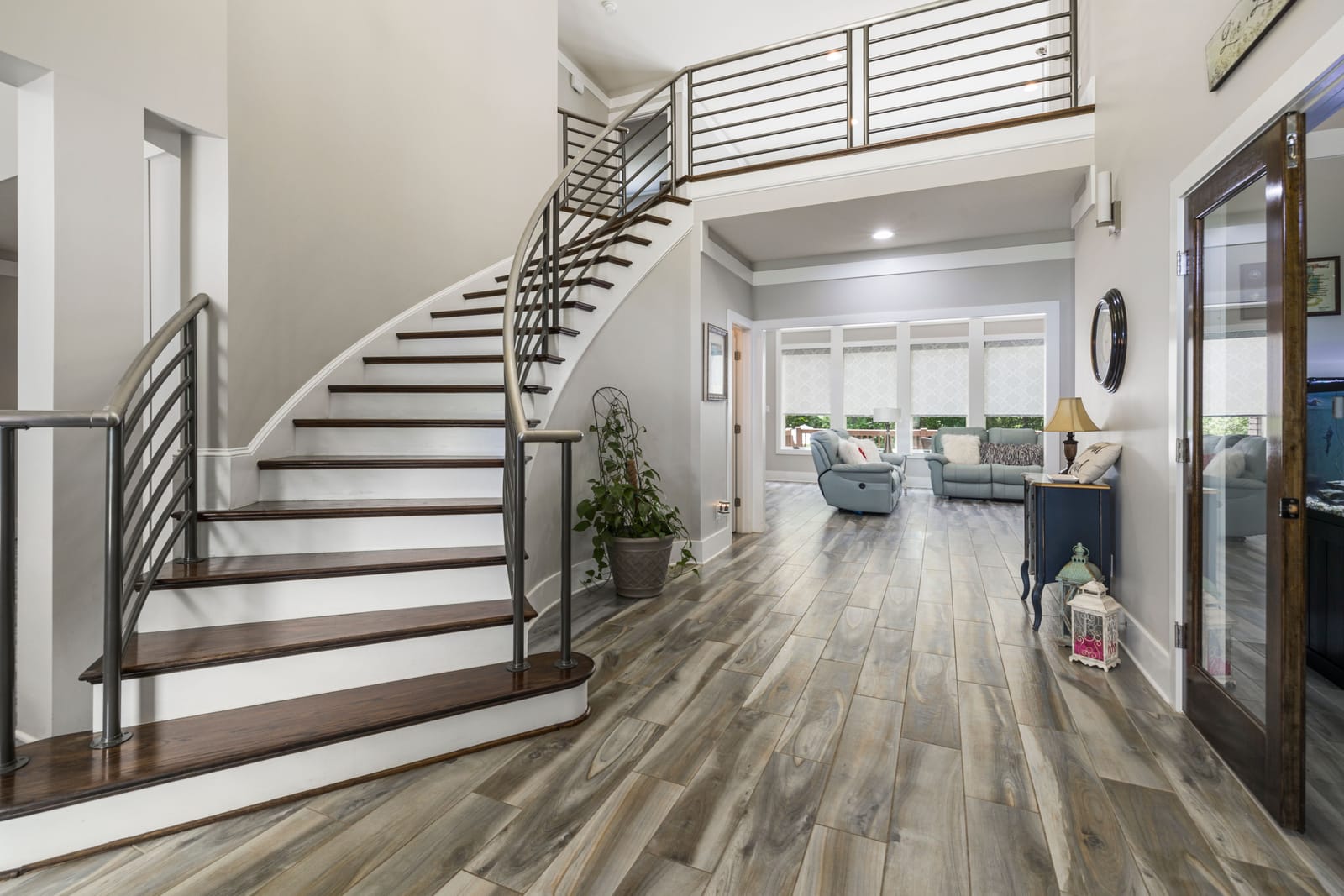
Treads, Risers, and Nosing
Understanding the parts of a staircase helps you plan the look you want.
- Treads: the horizontal surface you step on
- Risers: the vertical face between treads, often painted
- Nosing: the rounded front edge that adds safety and a finished look
- Returns: finished side edges on open staircases
Carpet to Hard-Surface Conversion
Replacing carpeted stairs with wood or wood-look treads is one of the most popular upgrades in the valley. It modernizes an entry, is far easier to keep clean in a dusty climate, and ties the staircase to updated floors.
The process involves removing the carpet and padding, prepping the stairs, and installing finished treads and risers.
Matching Stairs to Your Floors
The goal is for the staircase to flow naturally into the surrounding floors. We coordinate species, color, and finish so the stairs look like an intentional part of the home rather than an afterthought.
Doing the stairs and floors in the same project keeps everything matched and is usually more efficient.
Safety and Traction
Stairs see constant traffic, so safety comes first. Proper nosing gives a defined edge, treads are secured to prevent movement and squeaks, and finishes are chosen for reliable footing.
For households that want extra grip, we can discuss finish options and runners that keep the wood look on the sides while improving traction.
Cost and Planning
Stairs are priced per step rather than by simple square footage because of the precise cutting and finishing involved. Cost depends on the number of steps, the material, whether you are converting from carpet, and any railing or trim work.
Stairs are often bundled with a larger flooring project, and financing may be available through third-party providers.
Choosing the Right Material
Wood and engineered treads are best for a premium, refinishable look, while laminate and LVP offer durability and value, especially when matching existing floors. The right choice depends on your home, traffic, and budget.
Request a free estimate or book an appointment, and we will help you choose a stair material that is safe, durable, and beautifully matched to your floors.
Open vs Closed Staircases
The configuration of your staircase affects the work involved. Closed staircases have walls or skirt boards on both sides, while open staircases expose one or both ends of the treads and require finished returns for a clean look.
Open stairs, curved steps, and winders demand extra precision because every exposed edge is visible, so the material and craftsmanship matter even more.
Coordinating Railings and Trim
Stairs are a focal point, so the railing, newel posts, balusters, and skirt boards are part of the overall look. Updating or refinishing these elements alongside new treads can transform a dated staircase.
Even when the railing stays, we work cleanly around posts and balusters so the new treads and risers fit tightly and the staircase reads as one cohesive piece.
Maintenance by Stair Material
All hard-surface stair materials are easier to keep clean than carpet, which traps dust in our climate. Wood and engineered treads take gentle wood-floor cleaning, while laminate and LVP wipe down easily.
Because stairs see concentrated traffic, a durable finish and the occasional runner in the busiest staircases help protect the surface over time.
Stairs in Two-Story Valley Homes
Many homes across Henderson, Summerlin, Enterprise, and the wider valley are two-story, which makes the staircase one of the first things guests see. Converting carpeted stairs to wood-look treads instantly elevates an entry and ties the levels together.
Matching the stairs to the floors on both levels creates a seamless flow that makes the whole home feel finished.
Planning Your Stair Project
Whether you are converting carpet or upgrading existing stairs, the project starts with an on-site look so we can count the steps, check the configuration, and discuss materials and finishes.
Stairs are often combined with a larger flooring project for a matched result, and financing may be available through third-party providers. Request a free estimate or book an appointment to get started.
Budget Considerations for Stair Materials
Stair material choice affects both the look and the budget. Solid wood treads sit at the premium end, engineered wood in the middle, and laminate or LVP treads offer the most budget-friendly path while still delivering a finished, durable result.
Because stairs are priced per step, the number of steps matters as much as the material. A short flight in premium wood may cost less than a long staircase in a budget product.
We help you weigh material against the number of steps and the look you want so the stairs fit both your home and your budget.
Why Stairs Are Worth Professional Installation
Stairs are the part of a flooring project where do-it-yourself attempts most often go wrong. Precise tread and riser cuts, secure fastening, safe nosing, and clean returns all require experience and the right tools.
A poorly built staircase is not just unattractive, it can be unsafe, with loose treads or inconsistent step heights that create trip hazards. The stakes are higher than on an open floor.
Professional installation ensures the staircase is safe, squeak-free, and beautifully matched to your floors, which is why stairs are one of the best places to rely on a skilled crew.
Matching Stairs Across Two Levels
In a two-story home, the staircase connects floors that should feel related. Matching the stair treads to the flooring on at least one level, and coordinating tones with both, makes the home flow visually from top to bottom.
Some homeowners carry the same wood-look material up the stairs and onto the upper landing, while others use stairs as a deliberate transition point between two coordinating floors. Either approach works when it is planned intentionally.
We help you decide how the stairs should relate to the floors above and below so the result looks cohesive rather than accidental.
Getting Stairs and Floors Done Together
Whenever possible, it is efficient to install stairs as part of a larger flooring project. Doing them together keeps colors and lots matched, avoids a second mobilization, and ensures the transitions between floors and stairs are planned as one design.
If your stairs are currently carpeted and you are updating the surrounding floors, that is the ideal moment to convert them to wood-look treads for a unified look.
Request a free estimate or book an appointment, and we will help you plan stairs and floors that come together as one finished result.
Frequently Asked Questions
Yes. Both can be installed on stairs using matching stair treads and nosing. Proper stair-specific trim is essential for safety and a finished look.
Yes, carpet-to-hard-surface conversions are one of our most requested stair upgrades. We remove the carpet, prep the stairs, and install finished treads and risers.
That is the goal. We coordinate species, color, and finish so the staircase flows naturally into the surrounding floors.
Stairs are typically priced per step because each tread, riser, and nosing requires precise measuring and cutting. The material and any trim or railing work also affect the total.
Thinking About New Floors?
Get a free, no-obligation estimate from a local Las Vegas flooring team that does the job right.